Footwork Fundamentals: The Foundation of Tennis & Padel
Footwork fundamentals work best with complete training system. Combine with strength training for power. Add proper warm-up before sessions. Recover properly with our recovery guide. Support with nutrition. This complete system transforms your game.
See our tested-and-ranked picks in Best Recovery Gear for Racket Players on a Budget (2026).
Footwork Fundamentals – Movement Research
Footwork fundamentals in racket sports are studied extensively. The ITF Sport Science publishes movement research. ResearchGate aggregates tennis biomechanics studies. Footwork fundamentals development follows these scientific principles.
Footwork Fundamentals Tennis Padel at the Wall: The Key Difference
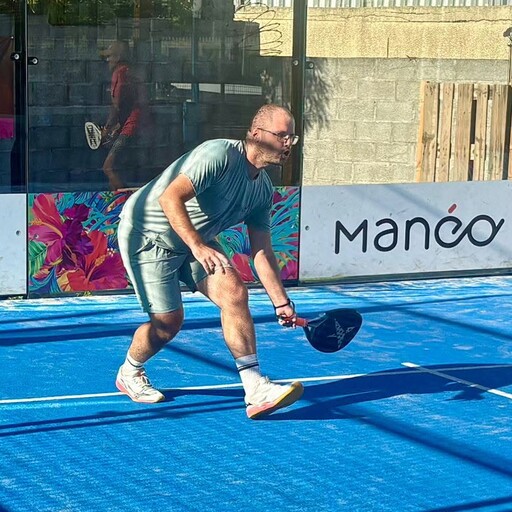
The footwork fundamentals that tennis padel players develop on a traditional court need one key adaptation for padel: wall reads. In padel, a ball can come back off the glass with pace and angle that requires you to read the rebound and reset your position instantly. Standard tennis footwork gets you to the ball; padel footwork fundamentals add the wall-loop reset—after playing a ball off the back glass, you must open your stance toward the centre, push off the wall and recover rather than following through into the corner.
Players who come from tennis often dominate the groundstrokes but struggle with their recovery position in padel because their footwork fundamentals tennis padel habits leave them standing in the corners after shots. The fix is deliberate: practice the two-step recovery after every ball that goes near the walls. Footwork fundamentals tennis padel players master this before anything else.
Footwork Fundamentals Tennis Padel: The Three Moves That Change Everything
Every footwork fundamentals tennis padel programme builds on three core movements: the split step, the lateral shuffle and the recovery sprint. Footwork fundamentals tennis padel coaches return to these three movements every single session because they underpin every shot in both sports. The footwork fundamentals tennis padel players tend to rush through — the split step timing — is the one that costs the most points and causes the most injuries. Footwork fundamentals tennis padel instruction often separates the sports too early; the base movements are identical for the first two to three years. For any player serious about improving, footwork fundamentals tennis padel training should make up 20-30% of total court time.
Recommended Shoes for Optimal Footwork
👟 Best Shoes for Tennis & Padel Footwork
padel shoes on Amazon
Specialist padel shoes for lateral movement
$149-$199
Shop padel shoes on Amazon →Footwork fundamentals in tennis padel are the foundation of every shot. You can have a perfect swing, but if your feet are in the wrong place, the shot falls apart. I’ve spent decades watching players (myself included) improve by fixing footwork, and I’ve watched technically gifted players plateau because their feet weren’t in the right position.
Better footwork fundamentals for tennis padel means less movement, less energy, less injury risk, and more control on every shot. These footwork fundamentals are what separates players who plateau from players who keep improving. Better footwork means less movement needed, less energy spent, less injury risk, and more control. This guide walks through the fundamentals that apply to both tennis and padel.
Why Footwork Fundamentals Tennis Padel Players Need to Drill Than You Think
Most players blame poor shots on their swing. “I didn’t make the stroke right.” Usually the real problem happened two steps before the swing: their feet were in the wrong place. When your feet are right, your upper body positions itself automatically. When your feet are wrong, no swing technique saves you.
Good footwork prevents injuries. When you’re in the right position for a shot, you load your joints properly. You’re stable. Your body can handle the forces. Bad footwork means reaching, overextending, and placing stress on knees and ankles under load. Over decades of play I’ve seen more tennis elbow and knee problems caused by poor footwork than by technique flaws in the swing itself.
Good footwork saves energy. A player with great footwork covers the court with 20% fewer steps. Over 3 sets (or multiple padel matches in a day), that’s massive. Less movement means you finish fresh while your opponent is tired.
Split Step: The Most Critical Footwork Fundamentals Tennis Padel Coaches Teach
The split step is your reset. Your feet are together, you’re balanced, and the moment your opponent’s racket meets the ball, you push off and move to cover the court. Most recreational players either don’t do a true split step or do it at the wrong time.
How to split step correctly:
1. As your opponent prepares to hit, move forward with small adjustment steps. Don’t just stand still waiting.
2. Time your split step (both feet leaving the ground) for the exact moment your opponent makes contact with the ball—not before, not after, right at contact.
3. Land with feet shoulder-width apart, knees slightly bent, weight forward on the balls of your feet.
4. From this position, push off and run to where the ball is going.
If your split step is late, you’re already moving the wrong direction when the ball is hit. If it’s early, you’ve moved back toward a neutral position and lost your momentum advantage. Timing it at contact gives you maximum speed toward the ball.
Recovery footwork (getting back to position)
After every shot, you need to move back to the center of the court (or the area where most shots come from). This is recovery footwork, and it’s where most recreational players get lazy.
The pattern: Hit the ball → Push off with your outside leg → Sprint back to center → Split step. The sprint back is the key. Don’t jog back casually; that’s how you get caught out of position on the next shot.
Setup footwork (getting into the right position for the shot)
Once you’ve run to the ball, your setup footwork determines if you can hit a good shot or a defensive one.
For groundstrokes: You want your feet shoulder-width apart, perpendicular (or slightly open) to the baseline. Your weight is mostly on your back foot. As you start your swing, you load into your back hip—most of the power comes from your legs.
For serve: Feet staggered, shoulder-width apart, parallel to the baseline (or slightly closed). Your weight starts on the back foot and transfers to your front foot through the serve.
For volley: Feet stay wide, knees bent, ready to move laterally. Most of the footwork on volley is small adjustment steps—you’re not running, you’re shuffling to get the racket in front of the ball.
The sidestep vs the crossover step
When you need to move laterally quickly, which foot moves first?
Sidestep (slide step): Push off your back foot and slide your front foot sideways first, then your back foot follows. Good for short movements and maintaining balance. Lower risk of tripping.
Crossover step: Your back foot crosses over your front foot, creating longer strides and faster coverage. Riskier—you can lose balance—but faster. Use when you need to move a long distance quickly.
Most recreational players don’t vary between these. Learn both. Short movements: sidestep. Scrambling to reach a wide shot: crossover step.
Padel-specific footwork (the difference from tennis)
Padel requires tighter, quicker footwork than tennis because the court is smaller and the walls change angles. You can’t run as far, so every step counts.
Padel footwork keys: Shorter steps, faster feet, more constant positioning near the net. Your recovery footwork is shorter and quicker. Your split step is even more critical because angles are tighter and reaction time is shorter. Get to the ball earlier in the bounce—don’t wait for it to rise to your ideal height.
Common footwork mistakes (and how to fix them)
Mistake 1: Standing flat-footed. You’re always on your heels. Fix: practice split steps constantly. Condition yourself to never be flat-footed between shots.
Mistake 2: Moving to the ball too late. You see where the ball is going and then move. By then you’re already rushed. Fix: anticipate earlier, start moving before you’re sure where the shot is coming.
Mistake 3: Not recovering to center. You stay where you just hit the ball, hoping the next shot comes to you. It won’t. Fix: train yourself to sprint back to center after every shot, before the next point starts.
Mistake 4: Crossing your feet under you. Your feet tangle, you trip, you lose balance. Fix: keep feet wider than you think you need to. Your base should feel stable even when you’re moving fast.
Training footwork (the drills)
The split step drill: Have someone feed you balls while you focus only on timing your split step. Don’t worry about hitting great shots. 10 minutes, 50-100 balls. Once you feel it, your body remembers it.
Ladder drills: Use an agility ladder to train fast feet and coordination. These build the muscle memory for quick footwork patterns.
Court positioning drills: Partner feeds, you move to the ball and get into proper hitting position (feet shoulder-width, perpendicular, weight on back foot). Make 20 perfect setups in a row before you hit a shot. Feel the position, don’t just move mindlessly.
For the complete recovery picture and how footwork prevents injuries, see our recovery guide for tennis and padel players. And if you need recovery tools to support your training, check our foam roller guide for leg and foot recovery.
Footwork Fundamentals Drills
Daily footwork fundamentals drills improve court awareness. The split step drill: have a partner feed balls while you focus only on timing your split step at contact. The ladder drill: agility ladders build fast feet coordination. The positioning drill: make 20 perfect setups in a row before hitting. These footwork fundamentals drills require 10-15 minutes daily but transform your movement quality within 3-4 weeks.
Footwork Fundamentals Checklist
- Split step timed at contact
- Recovery footwork to center after every shot
- Shoulder-width stance for stability
- Weight on balls of feet
- Small adjustment steps to the ball
Footwork Drills to Practice Daily
- Split step drill: 1 min – focus on timing at opponent contact
- Ladder drill: 2 min – agility footwork coordination
- Court positioning: 3 min – make 20 perfect setups before hitting
- Lateral quickness: 2 min – side-to-side cone work
FAQ: Footwork Fundamentals Tennis Padel Players Ask Most
Q: How long until footwork improves? A: 2 weeks noticeable. 4 weeks significant. 8 weeks transformation.
Footwork Fundamentals – Advanced Techniques
- Split step timing: Land just before opponent contact (most important)
- Cross-over step: Cover wide angles efficiently
- Recovery footwork: Return to optimal court position after every shot
- Pivot foot mechanics: Stable base for power generation
- Hop step: Sudden direction changes
Footwork Fundamentals – Training Equipment
Footwork fundamentals training requires minimal equipment. Agility ladder (15-$$25) for ladder drills. Cones (5-$$15) for direction changes. Resistance bands (15-$$30) for footwork strength. Court space (free) for sport-specific drills. Total under $$100 for complete footwork training system.
Footwork Skill Development Timeline
Footwork fundamentals develop gradually. Week 1-2: split step timing improves. Week 3-4: recovery footwork becomes habitual. Week 5-8: lateral movements faster. Week 9-12: advanced footwork patterns. Month 4+: footwork becomes automatic, allowing focus on shot selection. Investment in footwork pays dividends for entire career.
Footwork Integration with Complete Training
Footwork fundamentals work best with complete training system. Combine with strength training for power. Add proper warm-up before sessions. Recover properly with our recovery guide. Support with nutrition. This complete system transforms your game.
Footwork Fundamentals – Movement Research
Footwork fundamentals in racket sports are studied extensively. The ITF Sport Science publishes movement research. ResearchGate aggregates tennis biomechanics studies. Footwork fundamentals development follows these scientific principles.
Footwork Fundamentals Tennis Padel at the Wall: The Key Difference
The footwork fundamentals that tennis padel players develop on a traditional court need one key adaptation for padel: wall reads. In padel, a ball can come back off the glass with pace and angle that requires you to read the rebound and reset your position instantly. Standard tennis footwork gets you to the ball; padel footwork fundamentals add the wall-loop reset—after playing a ball off the back glass, you must open your stance toward the centre, push off the wall and recover rather than following through into the corner.
Players who come from tennis often dominate the groundstrokes but struggle with their recovery position in padel because their footwork fundamentals tennis padel habits leave them standing in the corners after shots. The fix is deliberate: practice the two-step recovery after every ball that goes near the walls. Footwork fundamentals tennis padel players master this before anything else.
Footwork Fundamentals Tennis Padel: The Three Moves That Change Everything
Every footwork fundamentals tennis padel programme builds on three core movements: the split step, the lateral shuffle and the recovery sprint. Footwork fundamentals tennis padel coaches return to these three movements every single session because they underpin every shot in both sports. The footwork fundamentals tennis padel players tend to rush through — the split step timing — is the one that costs the most points and causes the most injuries. Footwork fundamentals tennis padel instruction often separates the sports too early; the base movements are identical for the first two to three years. For any player serious about improving, footwork fundamentals tennis padel training should make up 20-30% of total court time.
Recommended Shoes for Optimal Footwork
👟 Best Shoes for Tennis & Padel Footwork
padel shoes on Amazon
Specialist padel shoes for lateral movement
$149-$199
Shop padel shoes on Amazon →