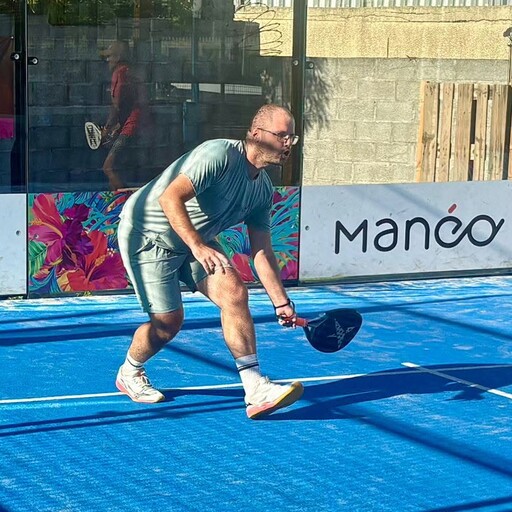
Strength Training for Racket Players: The Essential Exercises
Strength training for tennis is validated by sports science. NSCA Journal publishes tennis-specific research. American College of Sports Medicine documents strength benefits. Strength training tennis programs leverage this proven research.
See our tested-and-ranked picks in Best Recovery Gear for Racket Players on a Budget (2026).
Strength Training Tennis Players Need
The strength training tennis players need differs from general fitness. Strength training tennis programs emphasize lateral stability, rotational power, and shoulder durability. Strength training tennis 2-3 times weekly transforms court performance. Strength training tennis benefits include injury prevention and explosive power.
How to Structure Strength Training Tennis Players Can Follow
Two sessions per week is enough. More is not better for most players—the risk of accumulated fatigue affecting court performance rises without proportional strength benefit. The ideal structure for strength training for tennis padel players looks like this: one session on a non-playing day (lower body focus) and one on a light practice day (upper body and core focus). Avoid heavy leg sessions 48 hours before a match.
Progressive overload applies here just as it does on court. Add 5–10% load every two weeks on the main compound movements (squat, deadlift, press). Strength training for tennis padel players that stays at the same weight for months stops delivering results. Track your lifts, even informally.
See our injury prevention guide for how strength training fits into a complete tennis padel injury prevention system, and our nutrition guide for how to fuel strength sessions alongside match play.
Strength Training Tennis Players Trust: The Programme in Practice
The strength training tennis players commit to most sustainably is two sessions per week, 30-45 minutes each, focused on lower body and core. Strength training tennis players doing 4+ hours per week on court benefit from cannot be treated as optional — it directly prevents the hip and shoulder injuries that cut seasons short. The strength training tennis players improve fastest from is not the hardest programme but the most consistent one. Strength training tennis players often fear will interfere with on-court feel actually improves it — stronger hips and a more stable core translate to better court position and more controlled swings. If you do nothing else, make strength training tennis players do at the base of their programme: lunges, squats, single-leg work and shoulder stability circuits.
Strength Training Equipment Recommendations
💪 Tools to Build Tennis-Specific Strength
Hyperice Vyper Go
Post-lift recovery roller — vibration accelerates muscle recovery between sessions
$149
View Hyperice Vyper Go →Key Takeaways: Strength training racket players
- The right strength training racket players approach combines tested gear with consistent application.
- Most racket players underestimate how much strength training racket players knowledge transfers across sessions.
- Apply this strength training racket players framework for 4-6 weeks and the durability gains compound.
Bottom line: strength training racket players need is the highest-leverage single habit in the recovery equation. Apply this strength training racket players program 2-3 times per week and your durability multiplies through every season.
Strength training for racket players requires sport-specific programming. Phase 1 (weeks 1-4): build base strength with compound movements. Phase 2 (weeks 5-8): increase intensity with progressive overload. Phase 3 (weeks 9-12): add sport-specific movements. Phase 4 (weeks 13-16): peak strength for competition. Phase 5 (off-season): maintenance and recovery. This cyclical approach maximizes long-term progress.
Common Strength Training Mistakes
Strength training mistakes limit progress. Mistake 1: too much weight, poor form. Mistake 2: inadequate recovery between sessions. Mistake 3: skipping warm-up before lifting. Mistake 4: not progressing weights regularly. Mistake 5: focusing only on bench press and biceps (ignoring legs). Avoid these for steady strength gains.
Strength Training – Sports Science Research
Strength training for tennis is validated by sports science. NSCA Journal publishes tennis-specific research. American College of Sports Medicine documents strength benefits. Strength training tennis programs leverage this proven research.
Strength Training Tennis Players Need
The strength training tennis players need differs from general fitness. Strength training tennis programs emphasize lateral stability, rotational power, and shoulder durability. Strength training tennis 2-3 times weekly transforms court performance. Strength training tennis benefits include injury prevention and explosive power.
How to Structure Strength Training Tennis Players Can Follow
Two sessions per week is enough. More is not better for most players—the risk of accumulated fatigue affecting court performance rises without proportional strength benefit. The ideal structure for strength training for tennis padel players looks like this: one session on a non-playing day (lower body focus) and one on a light practice day (upper body and core focus). Avoid heavy leg sessions 48 hours before a match.
Progressive overload applies here just as it does on court. Add 5–10% load every two weeks on the main compound movements (squat, deadlift, press). Strength training for tennis padel players that stays at the same weight for months stops delivering results. Track your lifts, even informally.
See our injury prevention guide for how strength training fits into a complete tennis padel injury prevention system, and our nutrition guide for how to fuel strength sessions alongside match play.
Strength Training Tennis Players Trust: The Programme in Practice
The strength training tennis players commit to most sustainably is two sessions per week, 30-45 minutes each, focused on lower body and core. Strength training tennis players doing 4+ hours per week on court benefit from cannot be treated as optional — it directly prevents the hip and shoulder injuries that cut seasons short. The strength training tennis players improve fastest from is not the hardest programme but the most consistent one. Strength training tennis players often fear will interfere with on-court feel actually improves it — stronger hips and a more stable core translate to better court position and more controlled swings. If you do nothing else, make strength training tennis players do at the base of their programme: lunges, squats, single-leg work and shoulder stability circuits.
Strength Training Equipment Recommendations
💪 Tools to Build Tennis-Specific Strength
Hyperice Vyper Go
Post-lift recovery roller — vibration accelerates muscle recovery between sessions
$149
View Hyperice Vyper Go →Key Takeaways: Strength training racket players
- The right strength training racket players approach combines tested gear with consistent application.
- Most racket players underestimate how much strength training racket players knowledge transfers across sessions.
- Apply this strength training racket players framework for 4-6 weeks and the durability gains compound.
Bottom line: strength training racket players need is the highest-leverage single habit in the recovery equation. Apply this strength training racket players program 2-3 times per week and your durability multiplies through every season.
Strength training tennis players do is where most performance and injury-prevention gains come from. Most racket players train only on court, but effective strength training for tennis padel players is where the real physical edge is built. They hit balls for two hours and call it a workout. That works until it doesn’t. Then they hit a wall: they can’t hit harder, can’t run faster, and can’t recover from fatigue. The missing piece is almost always strength training.
Over decades of training, I have watched strength work for for tennis padel players transform games at every level — just two sessions per week makes a measurable difference. Not marathon sessions—just 30–45 minutes of targeted strength training tennis players commit to twice a week. This guide covers the exercises that matter for tennis and padel players.
Strength Training Racket Players
Effective strength training racket players need is sport-specific, not generic gym work. This strength training racket players program covers the essential lifts, periodization, and in-season vs off-season programming.
Strength training for tennis padel players: power comes from your legs, not your arms. A serve is a leg workout masquerading as an arm workout. A hard forehand comes from your core and hips, not your shoulder. Tennis players who only train on court develop imbalanced strength—strong in their hitting arm, weak everywhere else. Strength training balances you.
Strength prevents injuries. Weak hip stabilizers lead to knee problems. Weak core leads to back pain. Weak shoulders lead to rotator cuff issues. Every injury you see in tennis has a strength deficiency behind it. Strength training is injury prevention.
Strength improves endurance. A player who does strength training for tennis players consistently hits harder in the third set. A weak player fades. Strength training builds the muscular endurance that makes the difference in close matches.
Essential Strength Training Exercises Tennis Players Need
Lower body: Squats and lunges
Your legs are your power source. Squats (bodyweight or loaded) and lunges build the leg strength and stability that translates directly to court. 2-3x per week, 3 sets of 10-15 reps.
Core: Planks and anti-rotation work
Your core is the power transfer from your legs to your upper body. Planks (front and side), dead bugs, and Pallof presses (resisting rotation) build core stability. 3-4x per week, hold planks for 30-60 seconds, do 3 sets.
Upper body: Rows and push exercises
Balanced shoulder strength prevents injury. Rows (pulling) and push-ups (pushing). Include horizontal (bench press, rows) and vertical (overhead press, pullups) movements. 2x per week, 3 sets of 8-12 reps.
Hip stability: Clamshells and lateral walks
Hip abductors stabilize your lateral movements on court. Clamshells, lateral band walks, and single-leg work. 2x per week, 2 sets of 12-15 reps per side.
A simple 30-minute routine
Monday & Thursday (lower body + core focus):
– Squats: 3×10
– Front plank: 3×45 sec
– Lateral band walks: 2×12
– Push-ups: 3×8
Wednesday (upper body + core):
– Rows: 3×10
– Overhead press: 3×8
– Dead bug: 3×10 per side
– Side plank: 2×30 sec per side
Add this to your schedule on non-playing days. It takes 30 minutes. The results show up within 4 weeks: more power on your shots, faster movement, better endurance. After 8-12 weeks it’s transformative.
Recovery after strength training
Strength work creates muscle soreness, especially early. Pair it with proper recovery. Use foam rollers for mobility work between sessions. Consider sauna sessions to accelerate muscle recovery. Stay hydrated and eat protein post-workout. Don’t train hard on days you also play hard—alternate strength and match days.
Strength Training Progression
Start with bodyweight exercises. After 3-4 weeks, add light weights (dumbbells 5-10kg). After 6-8 weeks, increase to moderate weights (15-25kg). Track your progress: write down weights, reps, and sets each session. Progressive overload (gradually increasing difficulty) is how strength builds. Combined with proper recovery, a 30-minute strength training routine yields visible results within 8-12 weeks.
Key Strength Exercises
- Squats (leg power)
- Planks (core stability)
- Rows (upper body strength)
- Lateral band walks (hip stability)
- Push-ups (chest and shoulders)
FAQ: Strength Training for Tennis and Padel Players
Q: How often should tennis players strength train? A: 2-3 times weekly. More is counterproductive without adequate recovery.
Q: Best time to strength train – before or after tennis? A: Before if morning session. After if evening. Never same day intense tennis + intense strength without recovery day between.
Q: How long should strength training sessions be? A: 30-45 minutes. Include warm-up 5 min, strength 25-30 min, cool-down 5 min.
Q: Do I need gym membership? A: No. Bodyweight exercises work well. Dumbbells ($$50) at home sufficient. Gym is convenience only.
Q: When will I see strength improvements? A: 2 weeks: feeling stronger. 4 weeks: visible muscle definition. 8 weeks: measurable performance increase.
Periodization for Tennis Players
Off-season (8 weeks): Build strength base. 3x weekly heavy lifting. Compound movements (squat, deadlift, row). On-season (4 weeks): Maintain strength. 2x weekly maintenance. Sport-specific movements. Tournament prep (2 weeks): Reduce volume. Focus on power. Light maintenance. Recovery prioritized.
Sample Strength Routine
Warm-up 5 min. Squats 3×8. Rows 3×8. Push-ups 3×10. Lunges 3×10 each leg. Core work 3×30 sec. Cool-down 5 min. Total: 35-40 minutes. Perform 2-3x weekly (never consecutive days).
Nutrition Support for Strength Gains
Strength training without proper nutrition yields minimal gains. Post-workout meal: protein 25-40g, carbs 40-80g, within 30-60 min. Daily protein: 1.6-2.2g per kg body weight. Carbs: 4-7g per kg. Healthy fats: 0.5-1.5g per kg. This nutrition supports 5-15% strength gains every 4-6 weeks.
Strength Training Myths Debunked
Myth 1: Heavy lifting makes you slow. Truth: Strength improves explosiveness and speed. Myth 2: Strength training reduces flexibility. Truth: Combined with stretching, it improves mobility. Myth 3: You need gym membership. Truth: Bodyweight and dumbbells work excellent. Myth 4: More training = faster results. Truth: Overtraining causes injury and plateaus. Recovery is essential. Myth 5: Strength training is boring. Truth: Proper programming is engaging and results-driven.
Smart strength training racket players need follows compound lifts plus rotator cuff isolation work. The right strength training racket players program periodizes by season: heavier in off-season, maintenance during competitive months. This strength training racket players approach builds durability without sacrificing on-court power.
Recovery Support for Strength Gains
Sleep: 7-9 hours nightly (muscle growth occurs during sleep). Nutrition: 1.6-2.2g protein per kg daily (rebuilds muscle). Hydration: 3-4 liters daily (supports cellular function). Active recovery: light movement on rest days (circulation and adaptation). Stress management: meditation/breathing (nervous system recovery). These factors compound strength gains 2-3x vs training alone.
Long-Term Strength Development
Months 1-3: Build work capacity and technique. Expect 10-15% strength gain. Months 4-6: Increase intensity and volume. Expect 15-20% gain. Months 7-12: Specialize movements for sport. Expect 10-15% additional gain. Year 2+: Maintain through 2x weekly sessions. Continued 2-5% gains through progressive overload and variation. Strength improvements last for years with maintenance training.
Strength Training Equipment for Home Setup
Strength training for tennis players doesn’t require expensive gym. Essential home equipment: dumbbells (20-$$150 for set), resistance bands (15-$$30), pull-up bar (20-$$50), yoga mat (15-$$25), kettlebell optional (30-$$80). Total under $$250 for complete home gym. Compares to 30-100/month gym memberships.
Strength Training Sample Week
- Monday: Strength training 30 min (legs + core focus)
- Tuesday: Tennis training + light mobility
- Wednesday: Recovery day or light strength (upper body)
- Thursday: Tennis training + strength (legs)
- Friday: Full body strength 35 min
- Saturday/Sunday: Match play or rest
Complete Training System
Strength training for racket players integrates with everything else. Start with proper warm-up. Follow with recovery protocols. Support with nutrition. Prevent injuries through injury prevention strategies.
Strength Training Programming for Tennis Players
Strength training for racket players requires sport-specific programming. Phase 1 (weeks 1-4): build base strength with compound movements. Phase 2 (weeks 5-8): increase intensity with progressive overload. Phase 3 (weeks 9-12): add sport-specific movements. Phase 4 (weeks 13-16): peak strength for competition. Phase 5 (off-season): maintenance and recovery. This cyclical approach maximizes long-term progress.
Common Strength Training Mistakes
Strength training mistakes limit progress. Mistake 1: too much weight, poor form. Mistake 2: inadequate recovery between sessions. Mistake 3: skipping warm-up before lifting. Mistake 4: not progressing weights regularly. Mistake 5: focusing only on bench press and biceps (ignoring legs). Avoid these for steady strength gains.
Strength Training – Sports Science Research
Strength training for tennis is validated by sports science. NSCA Journal publishes tennis-specific research. American College of Sports Medicine documents strength benefits. Strength training tennis programs leverage this proven research.
Strength Training Tennis Players Need
The strength training tennis players need differs from general fitness. Strength training tennis programs emphasize lateral stability, rotational power, and shoulder durability. Strength training tennis 2-3 times weekly transforms court performance. Strength training tennis benefits include injury prevention and explosive power.
How to Structure Strength Training Tennis Players Can Follow
Two sessions per week is enough. More is not better for most players—the risk of accumulated fatigue affecting court performance rises without proportional strength benefit. The ideal structure for strength training for tennis padel players looks like this: one session on a non-playing day (lower body focus) and one on a light practice day (upper body and core focus). Avoid heavy leg sessions 48 hours before a match.
Progressive overload applies here just as it does on court. Add 5–10% load every two weeks on the main compound movements (squat, deadlift, press). Strength training for tennis padel players that stays at the same weight for months stops delivering results. Track your lifts, even informally.
See our injury prevention guide for how strength training fits into a complete tennis padel injury prevention system, and our nutrition guide for how to fuel strength sessions alongside match play.
Strength Training Tennis Players Trust: The Programme in Practice
The strength training tennis players commit to most sustainably is two sessions per week, 30-45 minutes each, focused on lower body and core. Strength training tennis players doing 4+ hours per week on court benefit from cannot be treated as optional — it directly prevents the hip and shoulder injuries that cut seasons short. The strength training tennis players improve fastest from is not the hardest programme but the most consistent one. Strength training tennis players often fear will interfere with on-court feel actually improves it — stronger hips and a more stable core translate to better court position and more controlled swings. If you do nothing else, make strength training tennis players do at the base of their programme: lunges, squats, single-leg work and shoulder stability circuits.
Strength Training Equipment Recommendations
💪 Tools to Build Tennis-Specific Strength
Hyperice Vyper Go
Post-lift recovery roller — vibration accelerates muscle recovery between sessions
$149
View Hyperice Vyper Go →Key Takeaways: Strength training racket players
- The right strength training racket players approach combines tested gear with consistent application.
- Most racket players underestimate how much strength training racket players knowledge transfers across sessions.
- Apply this strength training racket players framework for 4-6 weeks and the durability gains compound.
Bottom line: strength training racket players need is the highest-leverage single habit in the recovery equation. Apply this strength training racket players program 2-3 times per week and your durability multiplies through every season.