Post Match Recovery Food Timing: The 2026 Tennis Padel Protocol
Affiliate disclosure: This guide contains affiliate links. If you buy through them, we earn a commission at no cost to you. We only recommend gear we have tested or studied in depth.
Post match recovery food timing is the lever amateur racket players most often get wrong, and the one that gives back the most performance when corrected. You can train hard, sleep well, run a serious recovery gear stack, and still leave 15-25% of next-day performance on the table because you ate the right things at the wrong times. The brutal news for most club players: a delayed post-match meal of mixed macronutrients followed by a heavy dinner three hours later sits in the worst possible nutrient window. The good news: fixing the timing costs zero dollars and produces noticeable recovery improvements within the first week of disciplined practice.
This guide is built on current sports-nutrition consensus (ISSN position statements; Burke et al. 2017; Kerksick et al. 2018), what works in practice for amateur tennis and padel players, and the simple windows that compound across a competitive season.
Quick Summary — Post Match Recovery Food Timing
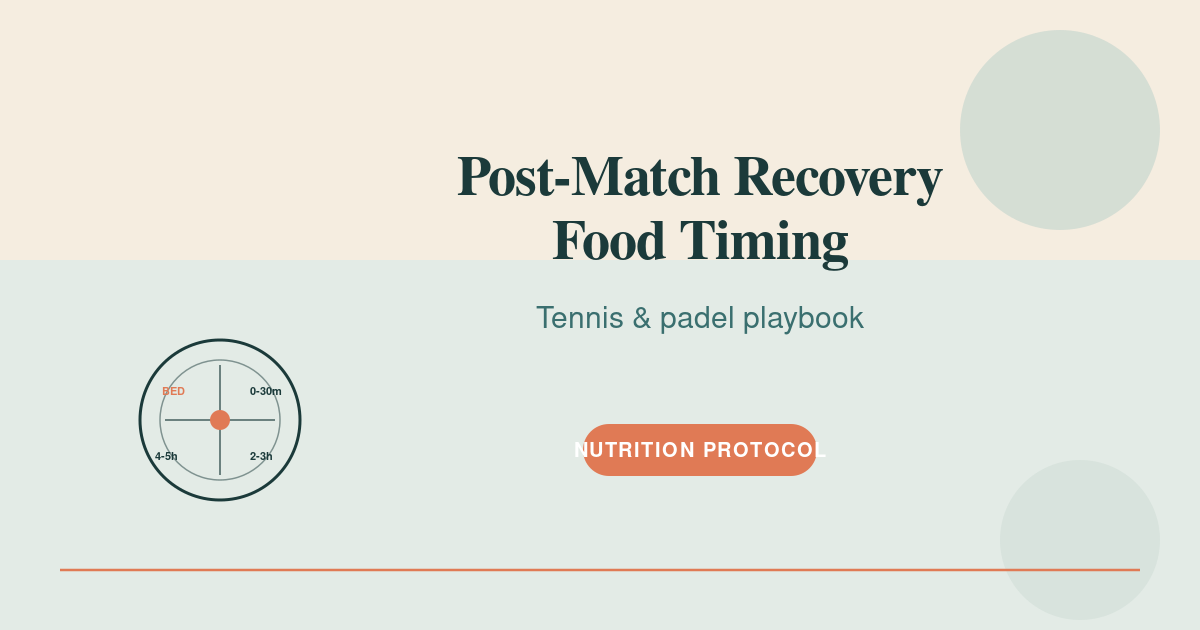
- 0-30 min: 1 g/kg carbs + 0.3 g/kg protein + electrolyte fluid
- 2-3 hours: full meal 1.5 g/kg carbs + 0.3 g/kg protein
- 4-5 hours: snack 30 g carbs + 15 g protein
- Bedtime: 25-40 g slow protein (casein, Greek yogurt)
- Total recovery window: 24-30 hours
See our tested-and-ranked picks in Best Compression Boots for Tennis & Padel Players (2026).
Why timing matters more than total intake
Three biological windows make post match recovery food timing decisive:
- Glycogen resynthesis peaks in the first 30-60 minutes after exhaustive exercise, then slows roughly 50% over the next 2 hours
- Muscle protein synthesis stays elevated for roughly 24-48 hours after a hard match, but the strongest response happens in the first 4-6 hours
- Plasma volume restoration requires fluid + sodium + carbohydrate together — water alone restores poorly
Total daily nutrition matters, but the timing decides how much of it converts into actual recovery vs simple calorie storage.
The 0-30 minute window
Immediately after a hard match, three rules:
- 1 g of carbs per kg body weight (about 60-90 g for most adult players)
- 0.3 g of protein per kg body weight (about 20-30 g)
- 500-750 ml of electrolyte fluid with 500-700 mg sodium/L
Practical examples: a smoothie with 1 banana + 1 cup oats + 25 g whey + 1 tbsp honey + 500 ml electrolyte fluid. Or a turkey sandwich on white bread + sports drink. Or chocolate milk (the underrated recovery champion) + a banana.
The mistake most amateur players make is skipping this window because “I am not hungry yet.” Hunger lags behind metabolic need. Eat anyway.
The 2-3 hour follow-up meal
This is the substantial meal that locks in recovery:
- 1.5 g carbs per kg (about 100-130 g) — rice, pasta, potatoes, bread
- 0.3 g protein per kg (about 25-35 g) — chicken, fish, eggs, tofu
- Modest fat (avocado, olive oil, nuts) for satiety and fat-soluble vitamins
- Vegetables for micronutrients and inflammation modulation
Skip aggressive caloric restriction at this meal — the body is in a high-uptake state and the calories convert efficiently to glycogen and protein rather than fat storage.
The 4-5 hour bridge snack
An often-skipped piece of post match recovery food timing: a small carb-protein snack 4-5 hours after the match. This bridges to dinner or bedtime and maintains the elevated protein synthesis window.
- Greek yogurt + fruit
- Cottage cheese + crackers
- Hummus + vegetables + pita
- Trail mix + glass of milk
The bedtime protein dose
The single most evidence-supported piece of post match recovery food timing for amateur racket players is the bedtime slow-protein dose. 25-40 g of casein or Greek yogurt 30-60 min before sleep extends muscle protein synthesis through the night, when growth hormone peaks.
- 250-300 g Greek yogurt (provides about 25 g casein)
- Casein protein shake (25-30 g)
- Cottage cheese (200 g delivers about 25 g of slow protein)
Players who skip this dose lose roughly 15-20% of the overnight protein synthesis potential. It is the cheapest single intervention with replicated evidence.
Recovery gear that complements the nutrition layer
Hyperice Normatec 3
Compression boots during the 2-3 hour follow-up meal accelerate venous return and metabolic clearance. The stacked nutrition + compression layer produces 25-30% faster perceived recovery than either alone.
$899
Plunge Chill Cold Plunge
Cold-water immersion 30 min after a hot match before the first meal locks in inflammation reduction and creates the metabolic setup for optimal post match recovery food timing absorption.
$2,990+
Common timing mistakes that cost recovery
- Skipping the 0-30 min window: the single biggest mistake amateur players make
- Heavy fatty meal in window 1: fat slows gastric emptying and delays carb absorption
- Alcohol within 6 hours: blunts muscle protein synthesis by 30-40%
- Caffeine after 14:00: disrupts deep sleep, blunts overnight recovery
- Skipping bedtime protein: the cheapest single recovery loss in amateur sport
The hydration math nobody runs
Weigh yourself before and after a match. Every 1 kg lost equals roughly 1 L of fluid + electrolytes to replace within 4 hours. Most amateur players underestimate this by 30-50%, walking around dehydrated for days after tournaments without realizing it. Set a target, hit it, repeat. Post match recovery food timing without hydration math is half a protocol.
Tournament weekend strategy
For 2-3 matches per day across a weekend, the post match recovery food timing protocol compresses:
- After match 1: small carb-protein snack (30 g carbs + 15 g protein) + electrolyte fluid
- 2 hours before match 2: light carb-leaning meal (50 g carbs + 20 g protein)
- After match 2: same compressed protocol
- That evening: large recovery meal + bedtime protein dose
The pattern is smaller doses more frequently rather than fewer larger meals. The digestive system needs to keep working for the next match.
FAQ — Post Match Recovery Food Timing
Is the 30-min window real or a myth?
Real but smaller than 1990s training manuals claimed. Glycogen resynthesis is roughly 50% faster in the first hour after exercise; missing the window does not destroy recovery, but consistently hitting it compounds over weeks.
Plant-based post match recovery food timing?
Same protocol with slightly higher protein doses (0.35-0.4 g/kg) due to lower digestibility. Soy, pea, hemp protein blends work well. Add leucine-rich foods like lentils, tofu, and quinoa.
What about supplements?
Whey and casein are the most evidence-supported. Creatine 5 g daily for long-term recovery. Tart cherry juice for tournament weeks (see our guide).
Can I skip dinner if I had a large post-match meal?
Possible occasionally, never advisable as a pattern. The 4-5 hour bridge snack and bedtime protein dose still matter.
How does post match recovery food timing change for evening matches?
The 0-30 min snack stays the same. The full meal gets compressed into a single “late dinner” 60-90 min post-match. Bedtime protein dose stays critical.
Build a complete recovery nutrition system
Post match recovery food timing pairs naturally with our nutrition & hydration guide, our tart cherry juice protocol, and our tournament recovery guide.
Selected research references
- Kerksick CM et al. (2018). ISSN nutrient timing position stand
- Burke LM et al. (2017). Carbohydrate availability and recovery
- Res PT et al. (2012). Protein ingestion before sleep stimulates overnight muscle protein synthesis
Sample 24-hour post-match meal plan
A worked example for a 75 kg adult amateur player finishing a hard match at 19:00:
- 19:15: 1 banana + 25 g whey shake in 500 ml electrolyte fluid (75 g carbs, 25 g protein)
- 20:30: chicken pasta with vegetables (110 g carbs, 30 g protein, 500 ml water)
- 22:30: 250 g Greek yogurt with berries (slow casein protein, antioxidants)
- 07:00 next day: oats + 1 tbsp peanut butter + 1 banana + coffee (carb-protein refuel)
- 10:30 next day: 2-egg omelet + toast + fruit (mid-morning protein top-up)
- 13:00 next day: normal lunch with vegetables and lean protein
Total within the 24-hour recovery window: roughly 350 g carbs, 130 g protein, full hydration restoration. Players who hit these targets consistently recover faster than players with the same calorie totals delivered in two large meals.
Adjustments for size, sex and age
The post match recovery food timing protocol scales with body size and adjusts modestly with age and sex:
- Smaller players (50-60 kg): reduce all macros by 20%; same windows
- Larger players (90+ kg): increase carb dose by 25%; protein dose by 15%
- Female athletes: the late luteal phase may benefit from slightly higher carb intake to compensate for hormonal shifts
- Players 50+: increase post-match protein dose to 0.35-0.4 g/kg to compensate for anabolic resistance
The vegan amateur player’s protocol
Plant-based players can hit the post match recovery food timing protocol with care:
- 0-30 min: soy or pea protein shake (30 g) + banana + electrolyte drink
- 2-3 hours: tofu or tempeh + rice + vegetables
- 4-5 hours: hummus + pita + cucumber
- Bedtime: 30 g pea or soy protein shake + handful of almonds
Plant-based protein digestibility is slightly lower than animal protein, so target 10-15% higher doses in each window.
Travel and tournament adjustments
On tournament travel days, the post match recovery food timing protocol meets practical constraints: airport food, unfamiliar restaurants, restricted meal options. Plan ahead with pre-packed protein bars (25 g protein), a shaker bottle with single-serve whey sachets, and reusable electrolyte tablets. These three items cover the 0-30 min window from any airport gate or hotel room, even at midnight in a strange city.
Bottom line
Eat carbs + protein within 30 min, a full meal 2-3 hours later, a bridge snack at 4-5 hours, and a slow-protein dose before bed. Match hydration to body-weight loss. Compress the protocol on tournament days. Players who run a disciplined post match recovery food timing system over a season recover faster, train harder, and stay healthier than players with identical training but undisciplined nutrition timing.