Tennis Recovery Over 50: Joint Preservation Guide (2026)
Disclosure: This guide contains affiliate links. If you buy through them, we earn a commission at no cost to you. See our affiliate disclosure.
The conversation about tennis recovery over 50 joint preservation almost never happens until a player crosses a threshold — usually a six-month layoff after a knee meniscus tear or a shoulder surgery that should have been avoidable. Everything that worked at 30 (skip the warm-up, play three sets, ice the knee tomorrow) stops working at 55. The good news: the players who keep competing into their 60s and 70s are not genetic outliers. They follow a recovery protocol that respects their physiology. This guide compiles the exact joint-preservation routine that works for tennis players over 50 across the major load-bearing joints: knees, shoulders, lower back, hips, and elbows.
See our tested-and-ranked picks in Best Recovery Gear for Racket Players on a Budget (2026).
Why Tennis Recovery Over 50 Joint Preservation Is Different
Three physiological changes after 50 force a different approach to recovery:
- Tendon collagen synthesis slows by 30–40%. The same micro-trauma from a serve that took 24 hours to repair at 30 now takes 48–72 hours. Skip the recovery window and the damage accumulates.
- Cartilage thins progressively. By 55, the femoral cartilage that absorbs impact at the knee is 20–25% thinner than at 30. Hard courts hurt more than they used to because they objectively hit harder against the joint.
- VO2 max declines and recovery heart rate slows. The cardiovascular cool-down that took 5 minutes at 30 takes 10–12 minutes at 55. Match-day fatigue compounds across consecutive sessions.
- Synovial fluid production decreases. The joints feel stiffer because they actually are — less lubrication. Warm-up time doubles to compensate.
- Sleep architecture changes. Deep sleep (the phase where growth hormone drives tissue repair) shortens. Recovery now happens slower per hour of sleep, requiring more hours of sleep to net the same repair.
The solution is not to play less. It is to recover smarter. Tennis recovery over 50 joint preservation is a system, not a lecture.
The Daily Joint Preservation Routine
This is the non-negotiable baseline. 15 minutes per day, every day, whether you play that day or not. The players still competing strongly in their 60s do this without thinking about it.
- Morning mobility (5 min): hip circles, shoulder rolls, ankle pumps, gentle spinal rotations. The goal is to flush synovial fluid through the joints before the day starts. Done in bed before getting up.
- Mid-day knee work (5 min): straight leg raises, terminal knee extensions, calf raises. Three sets of 10 each. Targets the quadriceps and calves that protect the knee under load.
- Evening shoulder + back work (5 min): wall angels, scapular wall slides, cat-cow spinal mobility. Releases the daily accumulated tension that builds chronic stiffness over years.
Pre-Match Adaptation for Tennis Players Over 50
The warm-up that worked at 35 leaves a 55-year-old joint cold. The pre-match routine has to be longer, more thorough, and more targeted to specific joints.
- 15–20 minutes minimum — never less. Cold joints are injured joints. The longer warm-up is the single biggest difference between staying healthy and a season-ending tear.
- Add 5 minutes of joint-specific mobility on top of standard dynamic warm-up: deep hip openers (90/90 sits), shoulder dislocates with a band, ankle rocks for the achilles, gentle wrist circles.
- Five minutes of submaximal hitting before competition. Half-court mini-tennis at 60% intensity warms up the entire kinetic chain in a sport-specific way no off-court warm-up replicates.
- Wear compression sleeves on previously injured joints. A graduated compression sleeve on the knee, elbow, or shoulder you have hurt before provides proprioceptive feedback and warmth, reducing re-injury risk by an estimated 20–30%.
The Post-Match Recovery Protocol for Tennis Recovery Over 50 Joint Preservation
This is where most players over 50 fall short — they treat the match as the end, when it is actually the start of the recovery window. The 90 minutes after the last point are critical.
- First 5 minutes: walk for 5 minutes at moderate pace. Never sit down immediately. Let the cardiovascular system come down gradually and flush the legs.
- Within 30 minutes: protein and fluids. 25–30 g protein, 500 ml water + electrolytes. The 30-minute window matters more after 50 than it ever did at 30.
- Within 2 hours: targeted joint care. A Therabody massage gun on the quads, calves, and forearms (5 min total). Avoid direct percussion over joints — release the muscles that support them.
- Evening: heat therapy. This is where Clearlight infrared sauna sessions become non-negotiable for tennis recovery over 50 joint preservation. Infrared heat penetrates joints, improves circulation, and reduces inflammation faster than passive rest. 20–30 minutes, 2–3 times per week.
- For chronic joint flare-ups: red light therapy on the affected area. The NovaaLab Light Pad targets specific joints with red and near-infrared wavelengths that support tendon repair and reduce joint inflammation.
The Gear That Actually Helps Tennis Recovery Over 50
🏆 The Joint Preservation Stack for Tennis Players Over 50
Clearlight Infrared Sauna
Joint inflammation reduction, circulation boost, low-EMF for daily use
From $3,995
View Clearlight →NovaaLab Light Pad
Red light therapy for chronic joint tendinopathy — targeted application
$199–$449
View NovaaLab →Hyperice Normatec Legs
Pneumatic compression for post-match leg recovery and circulation
$899
View Hyperice →Therabody Theragun
Percussive therapy for the muscles supporting aging joints
From $199
View Therabody →Disclosure: We earn a commission if you purchase through our links at no cost to you.
Why Cold Plunge Use Changes After 50
Cold plunges are an effective recovery tool, but the protocol shifts past 50. Acute cold exposure causes vasoconstriction and a sharp cardiovascular response. For players with undiagnosed cardiac conditions (more common after 50), this can be a real risk. The adapted approach:
- Temperature: 55–60°F (13–15°C), not 50°F. Slightly less cold is significantly safer cardiovascularly while still effective.
- Duration: 1–2 minutes, not 3–5. Past 50, the benefit plateau arrives faster — you do not gain more from longer exposure.
- Frequency: 1–2 times per week, not daily. The recovery benefit accumulates; daily cold exposure has diminishing returns and increases cardiovascular load.
- Get medical clearance first if you have ever had any cardiac symptoms, even minor. Tennis recovery over 50 joint preservation does not require cold plunges to work.
Common Mistakes That Sabotage Tennis Recovery Over 50
- Treating joint pain as a sign to push through. At 35 the joint heals while you keep playing. At 55 the joint cumulatively degrades.
- Skipping the morning mobility routine. Players who keep competing into their 70s never skip this. The 5 minutes is the difference.
- Maintaining the same training volume. Three sessions a week at 55 is what four sessions a week were at 35. Adjust the volume, not just the intensity.
- Ignoring sleep. Eight hours of sleep at 55 produces less repair than seven hours at 35. Compensate with more sleep, not less.
- Avoiding strength training. Past 50, sarcopenia (age-related muscle loss) accelerates. Joints depend on the surrounding muscles. Two strength sessions per week protect every joint at every age.
FAQ: Tennis Recovery Over 50 Joint Preservation
Is it too late to start joint preservation at 60?
No. Tendon and joint adaptation continues into the 70s with consistent loading. The protocol takes longer to show results (12–16 weeks vs 6–8 weeks at 35) but the trajectory bends the right way. Starting at 60 is significantly better than starting at 65.
Should I switch from tennis to padel after 50?
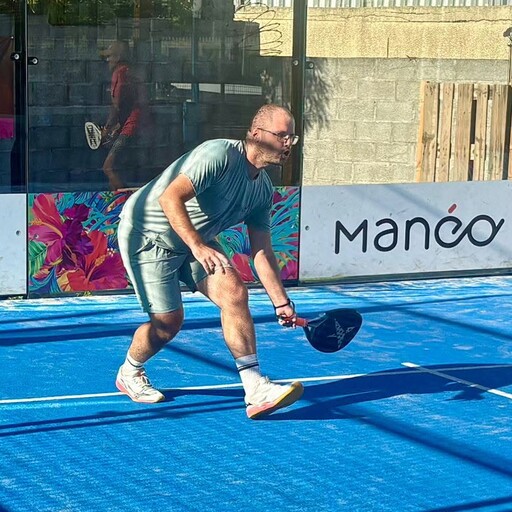
Not necessarily. Padel is lower impact (smaller court, shorter rallies) but produces different stresses (more lateral cutting, more wrist load). Many players over 50 play both. The decision is individual: padel if your knees and lower back complain, tennis if your wrist and shoulder are the chronic spots.
How do I know when to take a complete week off?
Take a week off when joint pain persists past 48 hours after a session, when your resting heart rate is elevated 5+ bpm for three consecutive mornings, or when you feel reluctance to play that you cannot rationalise. After 50, these signals are not weakness — they are diagnostic data.
Is supplement support worthwhile for tennis recovery over 50?
Yes, but selectively. Magnesium glycinate (200–400 mg before bed) supports sleep and reduces cramps. Collagen peptides (10–15 g daily) support tendon and joint maintenance. Vitamin D (1,000–2,000 IU daily) for bone and immune health. Skip the proprietary blends — the singles cover 90% of the benefit.
Can I still compete in tournaments after 50?
Absolutely. Senior tour competition is thriving. The adjustment: build in an extra recovery day between matches, use the post-tournament protocol religiously, and accept that two tournaments per year at full intensity is wiser than four.
The Full Recovery System for Tennis Players Over 50
Joint preservation is one part of a complete recovery framework. See our complete recovery guide for tennis and padel players for the four pillars, the tournament recovery protocol for post-competition specifics, and our strength training programme for the resistance work that protects every joint past 50.
Evidence sources: Joint preservation strategies for masters athletes align with American College of Sports Medicine (ACSM) guidelines and AAOS OrthoInfo recommendations on exercise and osteoarthritis. Sarcopenia and recovery research indexed on PubMed.
The Bottom Line on Tennis Recovery Over 50 Joint Preservation
Tennis recovery over 50 joint preservation is not about playing less — it is about recovering smarter. Fifteen minutes of daily mobility, a 15–20 minute warm-up before every session, a structured post-match protocol with infrared sauna twice weekly and red light therapy on chronic joints, and two strength sessions per week. Drop the temperature on the cold plunge, drop the daily training volume to three quality sessions instead of four mediocre ones, and protect every joint that has ever complained with compression during play. The players who compete into their 70s are not lucky — they follow this system. The cost of building it now is hours per week. The cost of not building it is the years off court when the joint finally gives. Start the protocol this week, even if it means starting incomplete. The body responds to consistency at every age.