Plantar Fasciitis Tennis Padel Recovery: The 14-Week 2026 Protocol
Affiliate disclosure: This guide contains affiliate links. If you buy through them, we earn a commission at no cost to you. We only recommend gear we have tested or studied in depth.
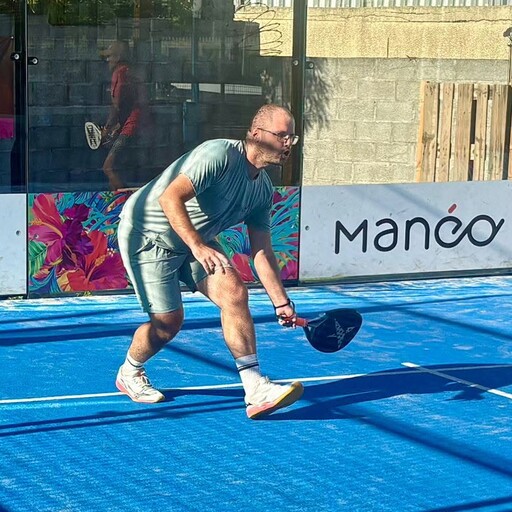
Plantar fasciitis tennis padel recovery is the search every player runs at 6 a.m. on a Sunday morning, taking that first painful step out of bed. The stabbing heel pain you feel when your foot hits the floor is the most recognized symptom of the condition that ends more amateur racket-sports seasons than any other foot injury. Frustrating part: most general guides ignore what tennis and padel specifically do to the plantar fascia — the repeated split-step landings, the lateral push-offs against hard clay or padel court, the months of compounded micro-tearing that finally tip into clinical pain.
This guide is built on current sports-medicine evidence (AAOS, JOSPT 2014 clinical practice guideline updated 2023) plus 20+ years of playing and research racket-sport athletes back from heel pain. We will cover what the plantar fascia actually does under a tennis split-step, the 4-phase recovery protocol that works, the gear that genuinely accelerates healing, and the prevention routine that keeps you on court once you are back.
Quick Summary — Plantar Fasciitis Tennis Padel Recovery
- Real cause: repeated eccentric loading of the fascia from split-steps + tight calves
- Phase 1 (weeks 0-2): off-court rest, ice, night splint, NSAID short course if needed
- Phase 2 (weeks 2-6): high-load slow heel raises (Rathleff protocol) + soft-tissue work
- Phase 3 (weeks 6-10): reintroduce running, hopping, lateral push-offs
- Phase 4 (weeks 10-14): return to match play with prevention routine
See our tested-and-ranked picks in Best Compression Boots for Tennis & Padel Players (2026).
Why tennis and padel destroy the plantar fascia
The plantar fascia is a thick band of connective tissue running from the calcaneus (heel bone) to the base of the toes. Its job is to act as a passive spring: storing and releasing energy every time you push off the ground. In normal walking, it absorbs 100% of body weight. In a tennis split-step landing? Studies put peak load at 2.5-3x body weight per foot. In a padel viborazo jump? Often 3.5x.
Three specific factors drive plantar fasciitis tennis padel recovery cases:
- Calf tightness: a stiff gastrocnemius-soleus complex pulls on the Achilles, which pulls on the plantar fascia through the windlass mechanism. Tight calves are the single biggest correctable risk factor.
- Court surface load: hard courts and padel artificial grass over concrete transmit ground reaction forces directly into the fascia.
- Training volume mismatch: jumping from 2 to 5 sessions per week in a tournament block exceeds tissue adaptation capacity.
Phase 1 (weeks 0-2): calm down the angry fascia
The first 14 days of plantar fasciitis tennis padel recovery are about reducing inflammation and protecting the tissue while it transitions out of acute irritation:
- Off-court: no tennis, no padel, no running. Cycling and swimming are fine for cardio maintenance.
- Ice: roll a frozen water bottle under the arch for 10 minutes, 3x daily
- Night splint: keeps the fascia at length overnight, reducing morning pain by ~30% on average (Cochrane review 2018)
- Footwear audit: stiff supportive shoes off-court, no barefoot at home for the first 2 weeks
- Short NSAID course (optional): 5-7 days max, discussed with a physician
If pain in the first morning step drops from 8/10 to 4/10 in 2 weeks, you are on track. If not, escalate to a sports physician for imaging.
Phase 2 (weeks 2-6): the high-load slow heel raise protocol
This is the breakthrough that changed plantar fasciitis tennis padel recovery in the last decade. Rathleff et al. (2015, Scandinavian Journal of Medicine & Science in Sports) showed that high-load slow heel raises with a towel under the toes outperformed plantar-specific stretching for both pain reduction and return-to-sport time.
The protocol:
- Stand on a step with a rolled towel under the toes of the affected foot (pre-loading the windlass)
- Heel raise up over 3 seconds, hold 2 seconds at top, lower over 3 seconds
- Start: 3 sets of 12, every other day, weeks 2-3
- Progress: add weight in a backpack, drop to 8 reps per set, weeks 4-6
Pain during the exercise up to 5/10 is acceptable; pain that lingers more than 24 hours means the load is too high.
Soft-tissue work: the daily 10 minutes that matters
Calf and plantar fascia tissue work daily is non-negotiable in any plantar fasciitis tennis padel recovery plan. The routine:
- Lacrosse ball or massage gun on the calves (gastrocnemius + soleus) — 3 min per leg
- Frozen water bottle roll under arch — 3 min per foot
- Ankle dorsiflexion mobility (knee-to-wall test) — 2 min
- Toe yoga / short-foot exercise — 2 min
Gear that supports the protocol
NovaaLab Red Light Therapy Pad
Red & near-infrared light pad for 10-15 min daily on the heel and arch. Multiple studies (Cinar et al. 2018, Tantawy et al. 2019) show photobiomodulation accelerates plantar fascia healing and reduces morning pain.
$399
Hyperice Hypervolt 2
Percussion massage device for the calf complex. The single highest-leverage piece of recovery gear for plantar fasciitis — loosening the gastrocnemius-soleus chain unloads the fascia.
$249
Phase 3 (weeks 6-10): reintroduce impact
Once you can do 3 sets of 12 single-leg heel raises with a 10 kg backpack without next-day pain, start adding back impact:
- Week 6-7: 20-min easy jog on grass or treadmill, low-impact shoes
- Week 7-8: light shadow swings + lateral shuffles, 15 min
- Week 8-9: court warm-up at 50% pace, no match play
- Week 9-10: first practice match at 75% intensity, monitor next-day pain
Pain progression matters more than calendar date. If a session triggers next-morning pain >3/10, drop back one stage. This is where most plantar fasciitis tennis padel recovery plans fail — players progress on the calendar, not on the symptom feedback loop.
Phase 4 (weeks 10-14): return to match play
By week 10 you can usually return to competitive matches if symptoms are below 2/10. Three rules for the first 4 weeks back:
- Cap to 2 matches per week, with 48 h between
- 10-min calf-and-foot mobility before every session
- Ice the arch for 10 min after every match for 4 weeks
Long-term prevention
Once you finish a plantar fasciitis tennis padel recovery cycle, your fascia stays vulnerable for 12-18 months. The prevention routine you bake in:
- 2x weekly heel-raise sessions, lifelong (3 sets of 12, light weight is fine)
- Daily 5 min of calf foam-rolling or massage gun
- Replace court shoes every 6 months at competitive volume
- Annual gait check with a sports physical therapist
FAQ — Plantar Fasciitis Tennis Padel Recovery
Do I need a cortisone injection?
Rarely. Cortisone provides 4-6 weeks of pain relief but is associated with higher rupture risk and faster fat-pad atrophy. Reserve for cases that fail 12+ weeks of conservative care.
Are custom orthotics worth it?
Off-the-shelf supportive insoles work nearly as well as custom orthotics for plantar fasciitis tennis padel recovery in most amateur cases (JFAS 2018 systematic review). Try a quality off-shelf first.
How long does plantar fasciitis last in racket players?
Median time-to-resolution with proper protocol is 10-14 weeks. Without protocol, 6-18 months — with recurrence in 50% of cases.
Can I play through plantar fasciitis with taping?
Possible short-term for must-play tournaments but it delays healing. Each match adds approximately 1 week to total recovery time. Not advisable unless your season hinges on it.
Will I need to change my padel or tennis shoes?
Yes, often. Shoes with stiffer torsion plates and better arch support outperform minimalist court shoes for fascia-vulnerable players. Look for shoes with a 6-10 mm heel-to-toe drop.
Build a complete foot-and-ankle recovery system
Plantar fasciitis tennis padel recovery pairs naturally with our Achilles tendinitis protocol, our best padel shoes guide, and our massage gun comparison.
Why morning pain is the diagnostic gold standard
The single most reliable diagnostic feature of plantar fasciitis is sharp heel pain in the first 5-10 steps after waking or after prolonged sitting. Why? Overnight, the fascia contracts to its shortest length. The first weight-bearing step stretches it abruptly, irritating the inflamed insertion at the calcaneus. As you walk for 10-15 minutes, the tissue gradually elongates and pain drops sharply — only to return at the end of a long day or after a tennis match.
If your morning pain pattern matches this exactly, plantar fasciitis tennis padel recovery is almost certainly the right diagnostic frame. If pain is constant, deep, or worse with rest, you should rule out other causes (calcaneal stress fracture, fat pad atrophy, tarsal tunnel syndrome) with a sports physician before starting any protocol.
The padel-specific risk factor most players miss
Padel shoes use a herringbone or omni sole pattern optimized for grip on artificial grass with sand infill. The downside: that grip means your foot does not slide on landing the way it would on a hard tennis court. The energy of the landing transfers more directly into the foot — especially the medial arch and heel. Players who switch from tennis-only to padel-tennis dual play often develop plantar fasciitis within 3-6 months because their foot tissue has not adapted to the new loading pattern.
If you are a recent padel convert with new heel pain, slow your padel introduction to 1-2 sessions per week for the first 8 weeks. Build tissue tolerance before volume.
Selected research references
- Martin RL et al. (2014/2023). Plantar fasciitis — JOSPT CPG
- Rathleff MS et al. (2015). High-load strength training for plantar fasciitis
- AAOS OrthoInfo — Plantar fasciitis patient guide
Bottom line
Heel pain in racket sports is not a mystery and it is not a permanent verdict. Calm the fascia, rebuild it with high-load slow heel raises, support it with calf work and red light therapy, then progress on symptoms not calendar dates. Players who run the full 14-week plantar fasciitis tennis padel recovery protocol return to competition stronger than before injury — and stay there.