Padel Wrist TFCC Injury Recovery: The 2026 Conservative Protocol
Affiliate disclosure: This guide contains affiliate links. If you buy through them, we earn a commission at no cost to you. We only recommend gear we have tested or studied in depth.
Padel wrist TFCC injury recovery is the conversation no amateur player wants to have, partly because the diagnosis often takes months to confirm. The triangular fibrocartilage complex (TFCC) sits on the ulnar side of the wrist, stabilizes the carpus during rotation, and tears under repeated forceful pronation/supination — exactly what padel produces on every bandeja. Unlike adductor strains or tennis elbow, TFCC injuries do not heal predictably with rest alone. The right diagnosis and protocol matter enormously.
This guide pulls together the current literature on TFCC injuries (Atzei et al. 2014 classification; Skirven et al. 2019 hand therapy text), padel-specific wrist loading patterns, and the conservative-first protocol that resolves most amateur TFCC injuries without surgical intervention.
Quick Summary — Padel Wrist TFCC Injury Recovery
- Hallmark symptom: ulnar-side wrist pain with rotation, clicking sometimes
- Conservative phase: 6-8 weeks of bracing + grip work
- Conservative success rate: 60-75% of amateur cases
- Return to padel: 12-16 weeks for conservative success
- Surgical referral: failed 12 weeks + imaging-confirmed peripheral tear
See our tested-and-ranked picks in Best Compression Boots for Tennis & Padel Players (2026).
Why padel produces TFCC injuries
Three padel-specific mechanisms drive TFCC injury frequency:
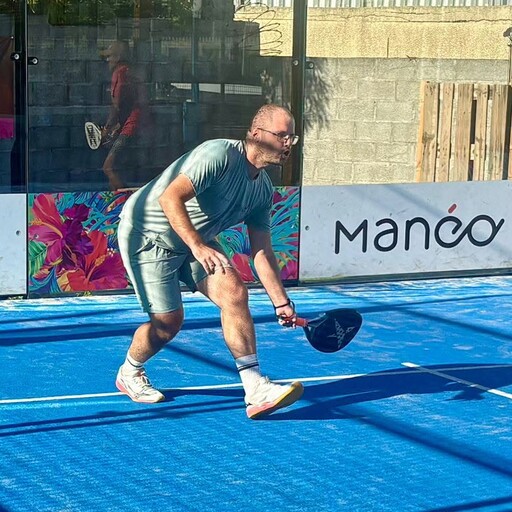
- Pronation under load: bandeja overhead with rotation is the textbook TFCC-stressing motion
- Wall-rebound wrist deviation: ulnar-side stress when adjusting to unexpected bounces
- Cumulative repetition: 100+ wrist rotations per match accumulate beyond what most amateur tissue tolerates
How to recognize TFCC vs other wrist pain
TFCC pain has specific features:
- Pain located on the ulnar side (pinky-finger side) of the wrist
- Worse with twisting motions (opening jars, turning doorknobs)
- Clicking or catching sensation on rotation
- Mild swelling possible but not prominent
- Worse with weight-bearing on the wrist (pushup position)
If pain is on the radial (thumb) side or central, it is not TFCC. See a sports physician for diagnosis confirmation.
The 6-week conservative protocol
- Weeks 1-3: wrist brace 24/7 except for hygiene, no padel, no tennis, no pushups
- Week 2+: begin isometric wrist exercises in neutral position, 3 sets of 5 holds of 10 sec
- Week 4-6: brace during loading activities only, begin light grip strengthening
- Week 4-6: introduce gentle pronation/supination range of motion exercises
Gear that supports the protocol
NovaaLab Red Light Therapy Pad
10-15 min daily red light therapy on the ulnar wrist supports cartilage and fibrous tissue healing. Emerging evidence for tendon/ligament applications applies here.
$399
Therabody Theragun Mini
Light percussion on the forearm flexor and extensor mass (not the wrist itself) reduces compensatory tightness during the bracing phase. Avoid direct percussion on the TFCC area.
$199
Strengthening phase (weeks 6-10)
Once symptoms calm, the strengthening phase focuses on:
- Isometric to isotonic wrist flexion/extension
- Forearm pronation/supination with light weight (dumbbell hammer rotation)
- Grip strengthening with stress ball, then putty
- Eccentric loading of wrist rotation patterns
Three sessions per week. The padel wrist TFCC injury recovery protocol depends on this phase being thorough; weak wrists return to padel and re-injure within weeks.
Return to padel sequence
Phased return after week 10:
- Week 10-11: shadow swings only, no contact
- Week 11-12: light hitting with wrist taping, no overhead
- Week 12-13: practice match at 70%, bandeja avoided
- Week 13-14: bandeja reintroduced cautiously
- Week 14+: full match play if no flare
When to escalate to a hand surgeon
Surgical consultation is warranted if:
- Symptoms persist past 12 weeks of structured conservative care
- Imaging confirms peripheral TFCC tear (some are repairable, central tears generally not)
- Mechanical symptoms (locking, severe clicking) interfere with daily function
- You need to return to competitive padel within 4-6 months and conservative care is failing
Surgical repair of peripheral TFCC tears has 75-85% success rates in athletes; central tears are typically debridged rather than repaired.
FAQ — Padel Wrist TFCC Injury Recovery
Will conservative care actually work for TFCC?
For 60-75% of amateur cases, yes. Peripheral tears that affect the vascular zone heal better than central tears.
Should I see a hand specialist immediately?
Useful for diagnosis confirmation. Most amateur padel cases run a conservative trial before surgical consultation.
Will I need an MRI?
MRI arthrogram is the gold standard for TFCC diagnosis. Reserve for failed 6+ weeks of bracing or pre-surgical planning.
Are wrist braces useful long-term?
For 4-6 months post-recovery during competitive play. Wean off gradually after full strength returns.
Can I prevent TFCC injuries?
Yes — grip pressure technique, wrist strength work, and gradual volume progression are the main protective factors.
Build a complete padel wrist system
Padel wrist TFCC injury recovery pairs naturally with our padel wrist pain guide, our forearm pain padel guide, and our padel shoulder impingement protocol.
Selected research references
- Atzei A et al. (2014). TFCC tears classification and treatment
- Iossifidis A et al. (2018). Conservative management of ulnar-sided wrist pain
- Tang JB et al. (2012). TFCC injuries in racket sports
The long-term maintenance routine
Once you finish padel wrist TFCC injury recovery, the wrist stays vulnerable for 6-12 months. Lifelong protection:
- Twice-weekly wrist and forearm strength routine (10 min sessions)
- Daily 3-min wrist mobility flow
- Grip pressure technique discipline
- Annual wrist strength check vs the other hand
What padel players over 50 need to know
TFCC tissue degrades meaningfully past age 50, making padel wrist TFCC injury recovery slower and recurrence more common. Adjustments for the 50+ population:
- Extend the bracing phase by 2-3 weeks
- Slower return-to-padel progression
- Consider permanent wrist support tape during competitive matches
- Regular hand therapy check-ins for the first year post-recovery
TFCC anatomy in detail
Understanding the TFCC’s anatomy makes the padel wrist TFCC injury recovery protocol logic clear. The complex consists of:
- Articular disc (central, avascular, poor healing capacity)
- Volar and dorsal radioulnar ligaments (peripheral, vascular zone, can heal)
- Ulnar collateral ligament (peripheral, can heal)
- Meniscus homologue and ulnocarpal ligaments
The Palmer classification distinguishes Class 1 (traumatic) from Class 2 (degenerative) tears. Padel produces both: acute Class 1 tears from a specific bad rotation, and Class 2 tears from cumulative load over months. The conservative protocol applies to both classes; surgical decisions depend on tear location relative to the vascular zone.
The clinical exam sequence
A sports physician evaluating suspected TFCC injury runs:
- Ulnar fovea test — pressing between ulnar styloid and flexor carpi ulnaris reproduces pain
- Press test — weight-bearing on the wrist reproduces pain
- Ulnocarpal stress test — ulnar deviation with axial load
- Grip strength asymmetry vs uninjured side
Three or more positive tests strongly suggest TFCC involvement. Imaging confirmation typically requires MRI arthrogram.
The hand therapy partnership
Most amateur padel wrist TFCC injury recovery cases benefit from at least 4-6 sessions with a hand therapist (CHT certification). The therapist provides:
- Custom brace fitting
- Manual therapy for stiffness
- Progressive loading protocols specific to your tissue tolerance
- Return-to-sport assessment and clearance
Players who attempt the protocol without therapist input often plateau or re-injure. The investment is meaningful.
The grip and equipment factors
Several padel-specific equipment factors influence TFCC stress:
- Grip size: too thin forces compensatory wrist tension, increasing TFCC load
- Racket weight: head-heavy frames increase rotational moment at the wrist
- Overgrip condition: dead overgrips change force transmission patterns
- String tension: too tight transmits more shock through the wrist
Address equipment alongside rehab. Players who return to padel with the same setup that caused the injury often recurrent within months.
Sleep position and the wrist
Sleep position affects padel wrist TFCC injury recovery progress. Avoid:
- Sleeping on the affected wrist directly
- Hand-under-pillow positions that compress the ulnar nerve
- Flexed wrist positions for prolonged periods
Use a small wrist brace at night for the first 4-6 weeks to maintain neutral position.
The mental component of TFCC recovery
Wrist injuries produce significant fear-avoidance behavior in racket players. Even after physical recovery, players often unconsciously guard the wrist during competitive play, leading to compensatory injuries (shoulder, elbow, lumbar). Counter-strategies:
- Deliberate exposure drills late in rehab that rehearse the previously feared movements
- Coach video feedback to identify subtle compensation
- Confidence-building practice matches at low stakes before competitive return
- Sports psychologist input if anxiety persists past full physical recovery
The physical timeline is 12-14 weeks. The mental confidence rebuild sometimes takes longer.
What to do if the conservative protocol fails
If 12+ weeks of structured conservative care produces no meaningful improvement, the next steps:
- MRI arthrogram for confirmed tear location and severity
- Hand surgeon consultation
- Discuss surgical options: arthroscopic debridement vs repair
- Post-surgical rehab adds 8-12 weeks beyond the conservative timeline
Total return-to-padel timeline for surgical cases: 6-9 months from injury. Conservative success means returning at 3-4 months. The math heavily favors a thorough conservative trial first for most amateur players.
The dual-wrist consideration
Players who develop padel wrist TFCC issues on one wrist face elevated risk of contralateral involvement within 12-24 months due to compensation patterns. Bilateral monitoring during recovery and lifelong protective routines apply to both sides. The conservative approach: build wrist strength and mobility routines that address both wrists simultaneously, regardless of which side originally injured.
Bottom line
TFCC injuries do not have to end your padel. Recognize the symptom pattern, run the 12-14 week conservative protocol, escalate to a hand surgeon only if conservative fails. Players who run a thorough padel wrist TFCC injury recovery protocol return to court without surgery in 60-75% of cases — saving themselves a 6-month surgical recovery and returning to bandeja safely.